The proposed development will transform and revitalise the long-derelict Ferodo factory and surrounding land, incorporating former landfill and contaminated land, bringing the area back into productive use. In doing so, it will carry the region’s long-standing industrial heritage into the modern era and secure the site’s future as an important hub for industry and innovation.
This will be achieved through a combination of investment and remediation around the former Ferodo site, alongside ecological enhancement measures.
The result will be a scalable data centre with a 450MW power connection, helping to improve digital services that are integral to modern life.
Throughout construction and operation, the facility will support high-skilled roles, training and education. We are working with local education providers, including colleges and universities, to maximise local training opportunities during construction and operation.
It will be sustainably managed and powered in part by local renewable sources, helping to utilise and retain North Wales’ energy.
The local area is a critical consideration in this proposal which ensures continued use of the surrounding area and the Lôn Las Menai cycleway and footpath, and no undue impact on the Menai Strait and associated Site of Special Scientific Interest (SSSI).
To support this and to help the development deliver tangible local benefits, you are invited to share your feedback on the proposals.
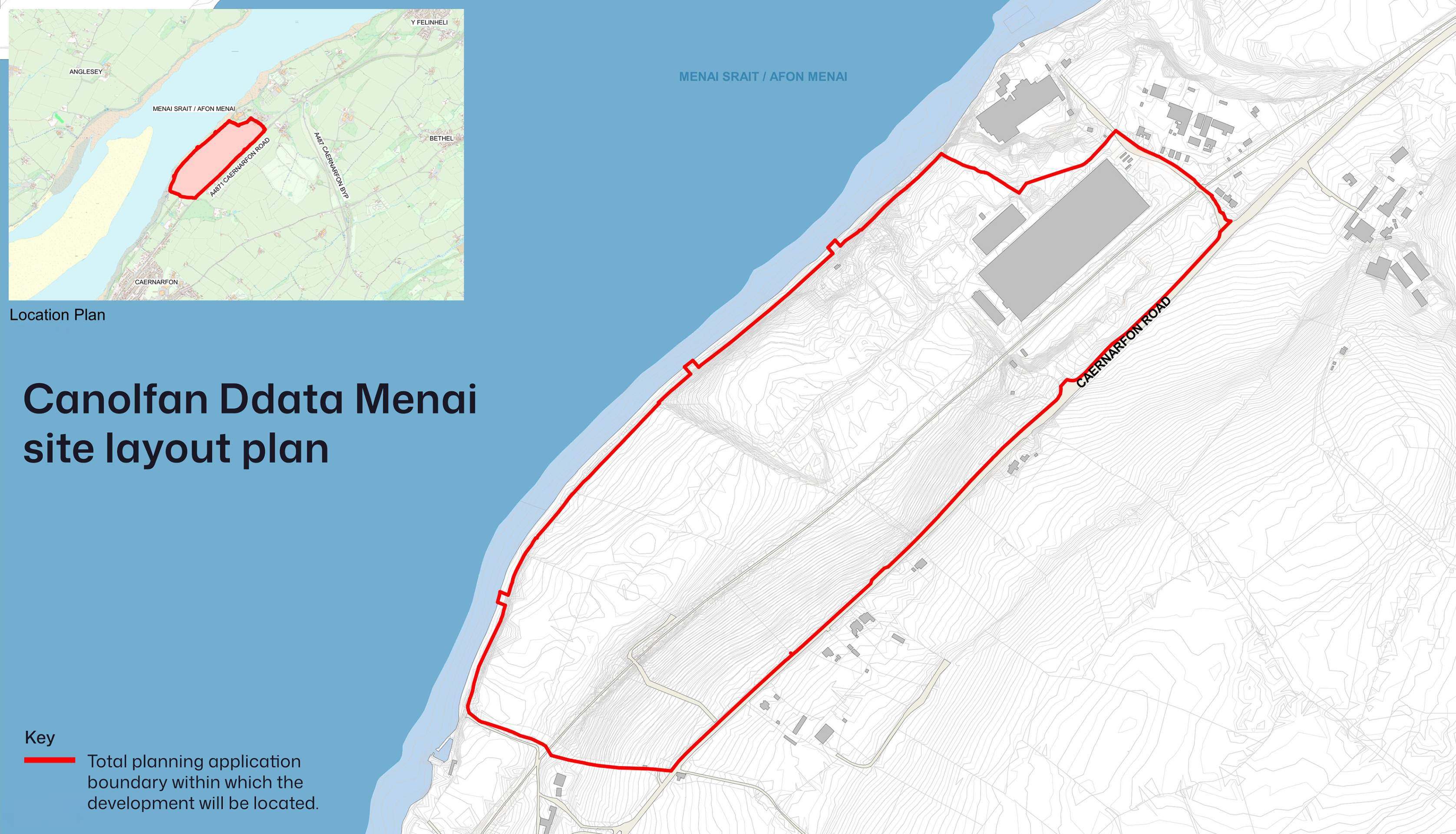
Total area that the development will cover including land reserved for ecological enhancement - click to enlarge
Our proposal
The proposed development near Caernarfon will be a new data centre facility with the capacity to increase Wales’ technological competitiveness and adaptability to meet evolving digital demand. It will help regenerate a long-derelict and contaminated industrial site and stimulate economic activity across the region while providing high-skilled local roles and investing in local skills and education.
The primary use of the site will be for a data centre facility that will house the computers and equipment needed to store and process the data that facilitates modern digital services such as AI tools and online communication and content streaming.
It will constitute a data centre campus built over several years on the footprint of the former Ferodo factory and the surrounding fields. This will be accompanied by substations and other supporting infrastructure.
The data centre will be powered by a direct transmission grid connection with underground cabling from the National Grid substation at Pentir, as opposed to overhead pylons. It will partially utilise renewable energy generated in North Wales.
The exact design of the facility is still being determined and will incorporate local feedback received during our ongoing community engagement where possible.
A consortium of design and construction partners with significant experience and expertise in the delivery of major digital infrastructure are bringing this project forward.
The site comprises the former Ferodo factory site and an adjacent area to the south, located between the town of Caernarfon and the village of Y Felinheli.
The site measures approximately 41.4 hectares, approximately eight hectares of which will be reserved for ecological enhancement.
It primarily sits between the Lôn Las Menai path, which will be maintained throughout construction and operation, and the Menai Strait, with some supporting features such as a substation building sitting between the path and Caernarfon Road.
Click on each site plan to enlarge
Total area that the development will cover including land reserved for ecological enhancement
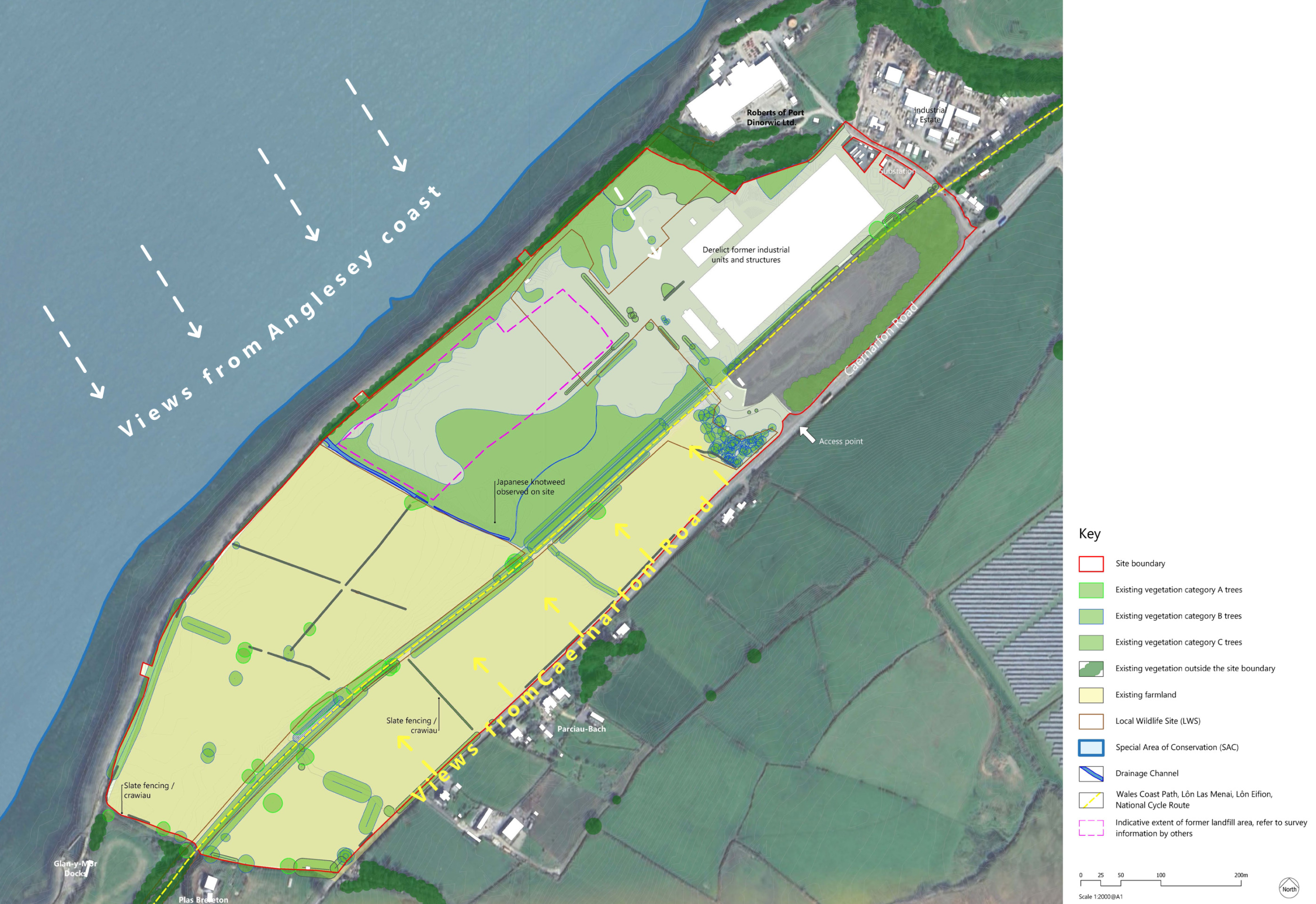
Site analysis plan
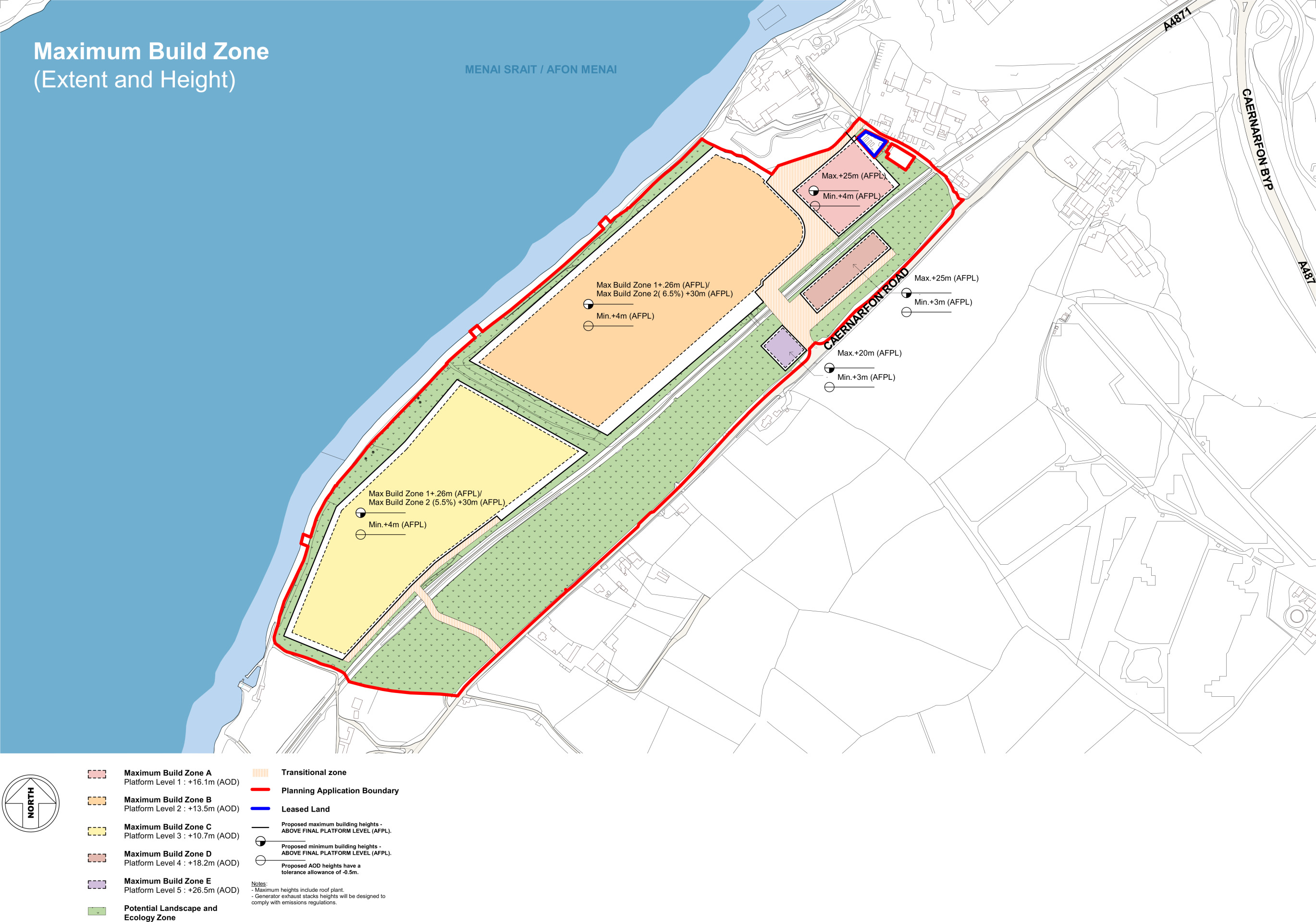
Maximum build zone
Local benefits
Site selection
The site has been chosen because of its ability to support Wales’ burgeoning digital economy.
It combines the space, including previously developed brownfield land, and proximity to grid power needed to support a large-scale data centre critical to meeting national digital infrastructure ambitions.
Its connection to strategic routes such as the A487 Caernarfon Bypass and employment hubs such as Caernarfon and Bangor also provide access to a local talent pool and supply chain partners as well as training and educational facilities that it can support.
Additionally, a data centre is one of the limited types of facility that could viably be brought forward on the site, given the level of remediation required, to be able to continue its rich industrial heritage.
Community benefits
This proposal forms part of a wider movement as Wales capitalises on the new industrial revolution through investment in next-generation digital infrastructure.
We are proud to contribute to this by revitalising this once-prosperous industrial site and creating the conditions to bring back high-skilled labour that will boost growth and help turn a page in the region’s industrial history. During construction, we anticipate creating 950 jobs for Welsh residents, along with a further 210 local jobs once the data centre is operational. Jobs in data centres are on average higher paid and of a higher occupation level.
The site will also create opportunities for local supply chains that can support the data centre through services such as facility maintenance and component manufacturing and will benefit the everyday economy through increased custom during construction and operation.
This growth will be facilitated for the long term thanks to partnerships with local educational organisations focused on developing the future pipeline of Welsh industry.
Natural landscape
Careful consideration will be given to the landscape as plans evolve to maintain the long-established balance between industrial and natural use of the area.
Eight hectares of the site have been designated for ecological enhancement. This will include measures to boost biodiversity and the curation of shared spaces to ensure the everyone can continue to enjoy the area. The community is invited to provide feedback and ideas to ensure this space is designed with local needs in mind.
The data centre will connect directly to the National Transmission system, allowing it to use North Wales’ surplus of renewably generated electricity while avoiding impact on local electricity supply and helping reduce the need to export renewable energy generated in North Wales.